The short answer
Laser welding can suit close-fitting sheet metal joints where focused heat and less cleanup matter. TIG offers close manual control, while MIG is often useful for filler-heavy joints and larger weldments. Choose from the joint, fit-up and required weld quality, then decide whether handheld or automatic welding fits the work.
Start with the joint and fit-up
Check the metal, thickness, joint shape and gap before comparing welding speed. SPARK and SEAM each list seam gaps up to 0.5 mm. That makes fit-up a key part of the buying decision.
A listed gap limit does not define weld strength or depth for every joint. Share the drawing and required weld size so an engineer can review the process. Choose fixtures that hold the seam where it needs to be.
Compare heat, control and filler needs
Laser welding generally creates a smaller heat-affected zone than TIG on suitable joints. This can help reduce distortion and work after welding. The final result still depends on the joint and settings.
| Job need | Laser welding | TIG | MIG |
|---|---|---|---|
| Heat control | Focused heat; often a smaller affected zone | Close manual control; often more heat spread | Heat depends on arc settings and travel |
| Joint fit-up | Close fit-up is important | Operator can control filler by hand | Wire feed supports joints needing more filler |
| Work after welding | Can reduce cleanup on suitable seams | Can make clean welds with skilled control | Spatter may add cleanup |
| Work pattern | Handheld or programmed repeat seams | Detailed work with manual control | Repeat welds and larger weldments |
Bring handheld welding to the part
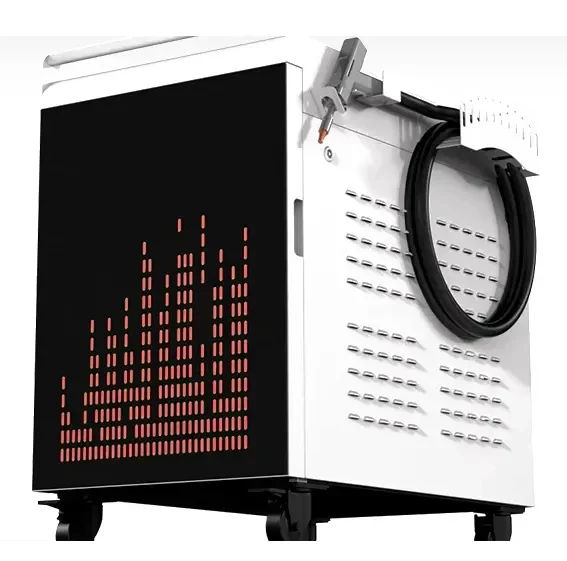
SPARK comes in 1500 W, 2000 W and 3000 W models. Its handheld torch and rolling cart bring welding to the work. Listed materials include stainless steel, carbon steel, aluminum and galvanized steel.
SPARK lists welding speed up to 120 mm/s. Treat that as a listed machine value, not a speed for every seam or a comparison with TIG or MIG. Part access, fit-up and weld quality set the pace of the job.
Choose automatic welding for repeat work
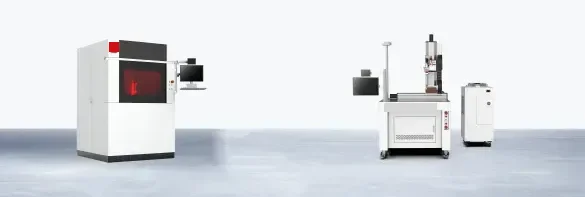
SEAM runs a programmed laser weld path on a platform. Open and enclosed models cover 1.5-3 kW across the range. It is listed for work such as stainless enclosures, kitchen equipment and sheet metal boxes.
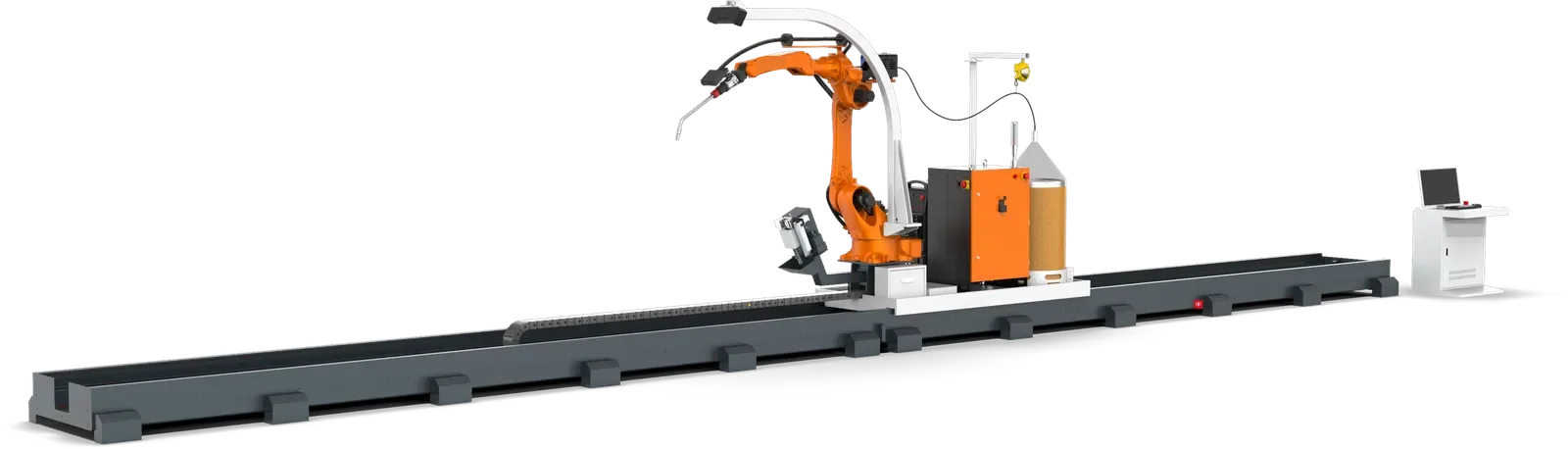
ATLAS W7 is a MIG/MAG arc welding station with a six-axis robot on a 10 m track. Its 3D vision finds seams and angles, while arc tracking adjusts the path during welding. It targets large parts such as crane girders and ribbed plate.
Judge the weld and the full work cycle
Compare fit-up, welding and cleanup as one job. A fast weld brings less benefit if parts take too long to hold in place or finish. Match the method to the weld quality your drawing requires.
Engineers can help with installation and training. SPARK and SEAM fall within the 2-year warranty for lasers at 12 kW and below. That laser warranty statement does not apply to the ATLAS W7 arc welding station.